How Cloud Backup Solutions Support Business Continuity
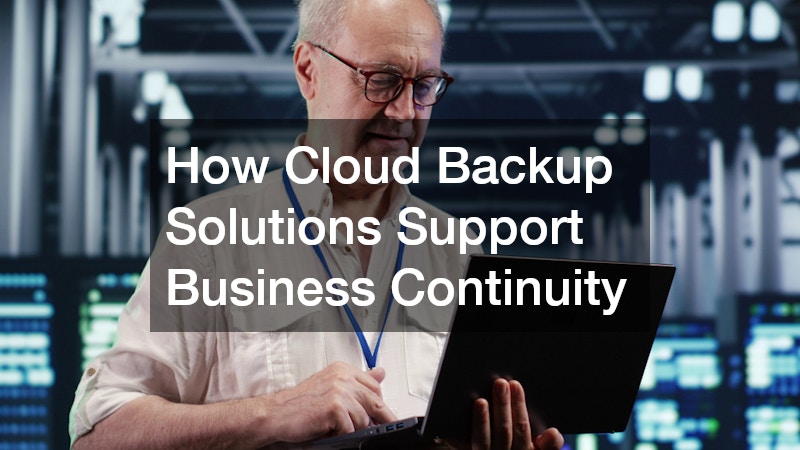

In today’s digital-first business environment, data is one of the most valuable assets a company can have. From customer records and financial information to operational files and communication systems, businesses rely heavily on data to function effectively. When that data is lost, corrupted, or compromised, the consequences can be immediate and severe.
Downtime can disrupt operations, reduce productivity, and damage customer trust. Even a short outage can lead to financial losses and missed opportunities.
This is why business continuity planning has become a critical priority for organizations of all sizes.
A key component of modern continuity strategies is reliable data protection. Many businesses are now turning to cloud backup solutions to ensure that their information remains secure, accessible, and recoverable in the event of unexpected disruptions. These systems provide a flexible and scalable way to safeguard essential data while minimizing downtime.
Understanding Business Continuity in a Digital World
Business continuity refers to an organization’s ability to maintain essential operations during and after a disruptive event. These disruptions can come in many forms, including cyberattacks, hardware failures, natural disasters, or human error.
Traditionally, businesses relied on physical storage methods such as external hard drives or on-site servers for backups. While these methods can still play a role, they come with limitations. Physical backups are vulnerable to theft, damage, and local disasters, and they often require manual updates and maintenance.
In contrast, modern digital strategies focus on resilience and rapid recovery. The goal is not just to prevent data loss but to ensure that operations can resume as quickly as possible after an incident. This shift has made advanced backup systems a core part of IT infrastructure planning.
Enhancing Recovery Speed and Reducing Downtime
One of the most important aspects of business continuity is recovery time. The faster a business can restore its systems, the less impact a disruption will have on operations.
Modern backup systems are designed to enable rapid recovery by storing data in secure, remote environments that can be accessed quickly. Instead of relying on physical restoration processes, businesses can retrieve their data through secure online platforms.
This is where cloud backup solutions play a critical role. They allow organizations to restore files, applications, and entire systems with minimal delay. In many cases, recovery can begin almost immediately after an incident is detected.
By reducing downtime, businesses can maintain productivity, meet customer expectations, and avoid significant financial losses.
Strengthening Protection Against Cyber Threats
Cybersecurity threats continue to grow in both frequency and complexity. Ransomware attacks, in particular, have become a major concern for businesses across industries. These attacks often encrypt critical data and demand payment for its release.
Without a secure backup system, organizations may feel pressured to pay ransom demands or face permanent data loss. However, having reliable backups allows businesses to restore their systems without giving in to attackers.
Cloud backup solutions provide an added layer of protection by storing copies of data in secure, off-site environments. These systems often include encryption, access controls, and versioning features that help protect against unauthorized access and data corruption.
This makes them an essential part of any modern cybersecurity strategy.
Reducing IT Maintenance and Operational Costs
Managing physical backup systems requires ongoing maintenance, including hardware updates, manual backups, and system monitoring. These tasks can be time-consuming and costly, especially for smaller IT teams.
Cloud-based systems reduce this burden by automating many of these processes. Backups can be scheduled automatically, and system updates are typically managed by the service provider.
This reduces the need for extensive in-house resources and allows IT teams to focus on more strategic tasks. It also helps reduce overall operational costs while maintaining strong data protection standards.
Businesses that adopt cloud backup solutions often find that they can achieve better protection with fewer internal resources, making it a cost-effective choice for long-term data management.
Ensuring Compliance and Data Security Standards
Many industries are subject to strict regulations regarding data protection and privacy. Compliance with standards such as GDPR, HIPAA, or industry-specific requirements is essential to avoid penalties and maintain customer trust.
Backup systems must not only store data securely but also ensure that it is handled in accordance with regulatory guidelines. This includes encryption, secure access controls, and audit capabilities.
Cloud-based systems are often designed with compliance in mind, offering built-in features that help businesses meet these requirements more easily.
By aligning backup strategies with regulatory standards, organizations can reduce risk and improve overall governance.
Business continuity depends on the ability to protect, access, and recover critical data quickly and efficiently. As digital operations become more complex, the risks associated with data loss continue to grow.
Reliable backup systems are no longer optional—they are essential for maintaining stability in the face of unexpected disruptions. From cyberattacks and system failures to human error and natural disasters, businesses must be prepared for a wide range of scenarios.
By adopting modern cloud backup solutions, organizations can improve recovery speed, enhance security, support remote work environments, and reduce operational costs. These systems provide the flexibility and resilience needed to keep businesses running smoothly, even during challenging events.
Ultimately, investing in strong backup strategies is not just about protecting data—it is about ensuring long-term stability, customer trust, and sustainable growth in an increasingly digital world.